How It Works
A step-by-step explanation of how the current system operates, and how the proposed framework builds on it.
Current Structure
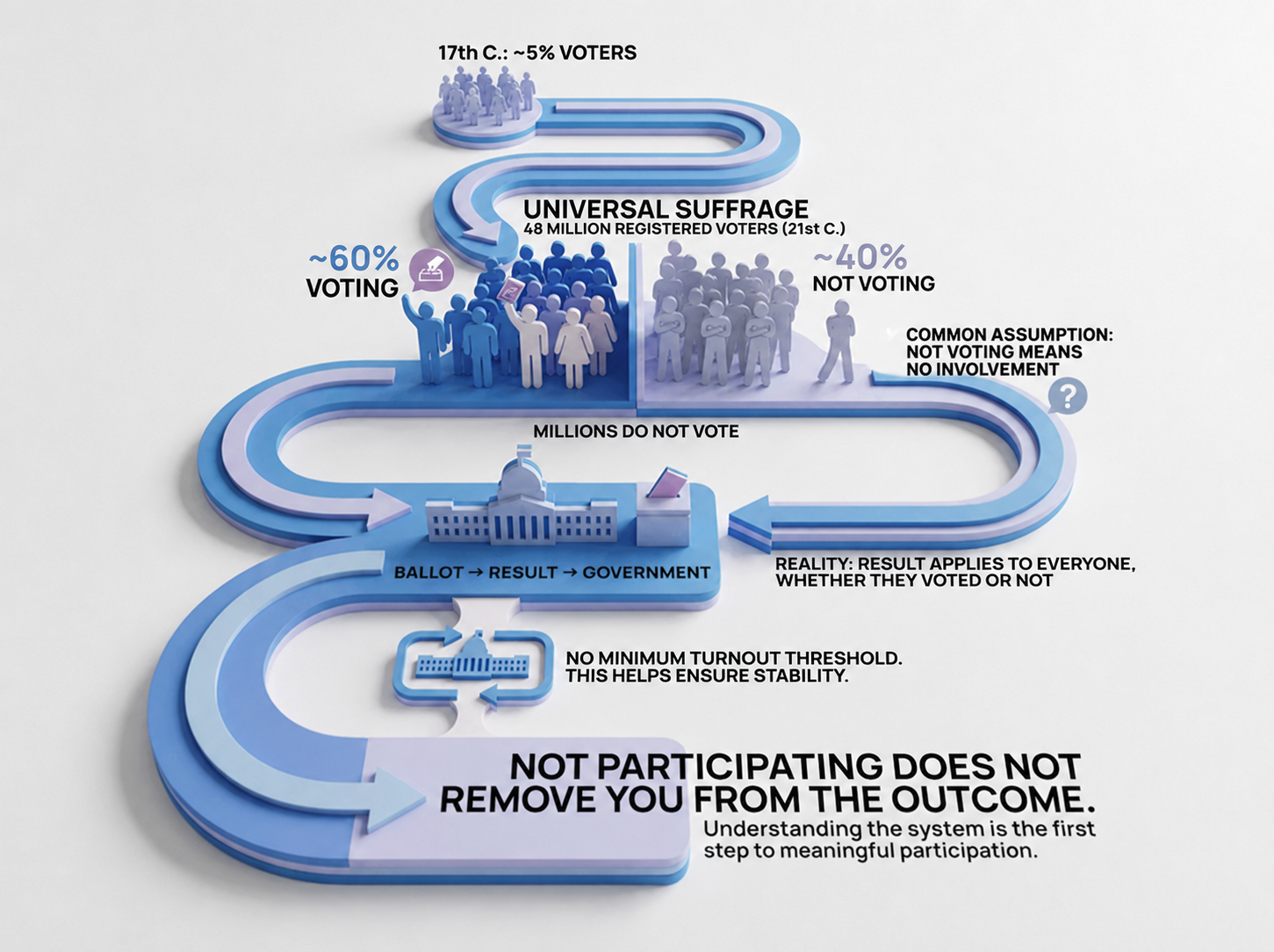
The current system is designed to ensure continuity.
Election results remain valid regardless of turnout. This means representation is established, government can continue, and decisions can still be made.
Participation affects who wins, but not whether a result is produced.
Diagram showing how the current electoral system works.
Click the diagram to open the full-size version.
Proposed Mechanism
The proposed framework keeps the existing electoral system in place.
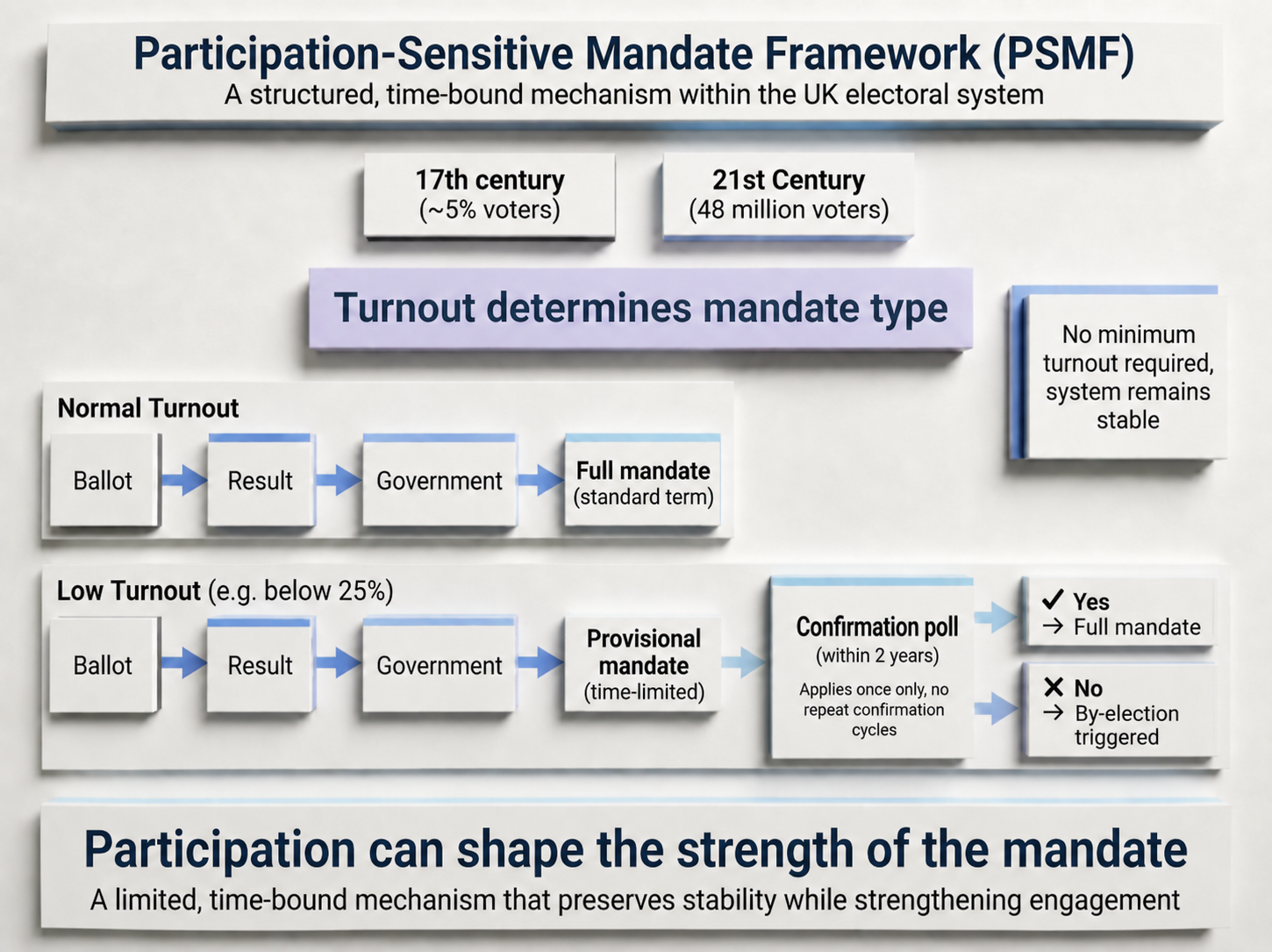
Elections still determine office. Representatives assume office immediately and with the full authority of that office. No result is cancelled, delayed or automatically rerun because turnout is low.
Where turnout at the original election falls below an exceptionally low and clearly defined threshold, one additional democratic mechanism is triggered: a one-time confirmation poll within a defined period.
The confirmation poll asks one question:
Do you confirm the current representative continuing in office for the remainder of the term?
Yes → the representative continues for the remainder of the term.
No → if valid votes against continuation exceed valid votes in favour, a by-election is triggered.
Low turnout in the confirmation poll does not itself disturb the mandate. Abstention does not count as rejection. A tied result, or any outcome that does not amount to active rejection, leaves the original mandate in place.
The confirmation opportunity occurs once only and is final for that term.
Low turnout may trigger acknowledgement, but only active rejection can remove the mandate.
Diagram showing how the proposed framework operates.
Click the diagram to open the full-size version.
Clarity is key.
Participation follows understanding.